A Simple 50-30-20 Approach
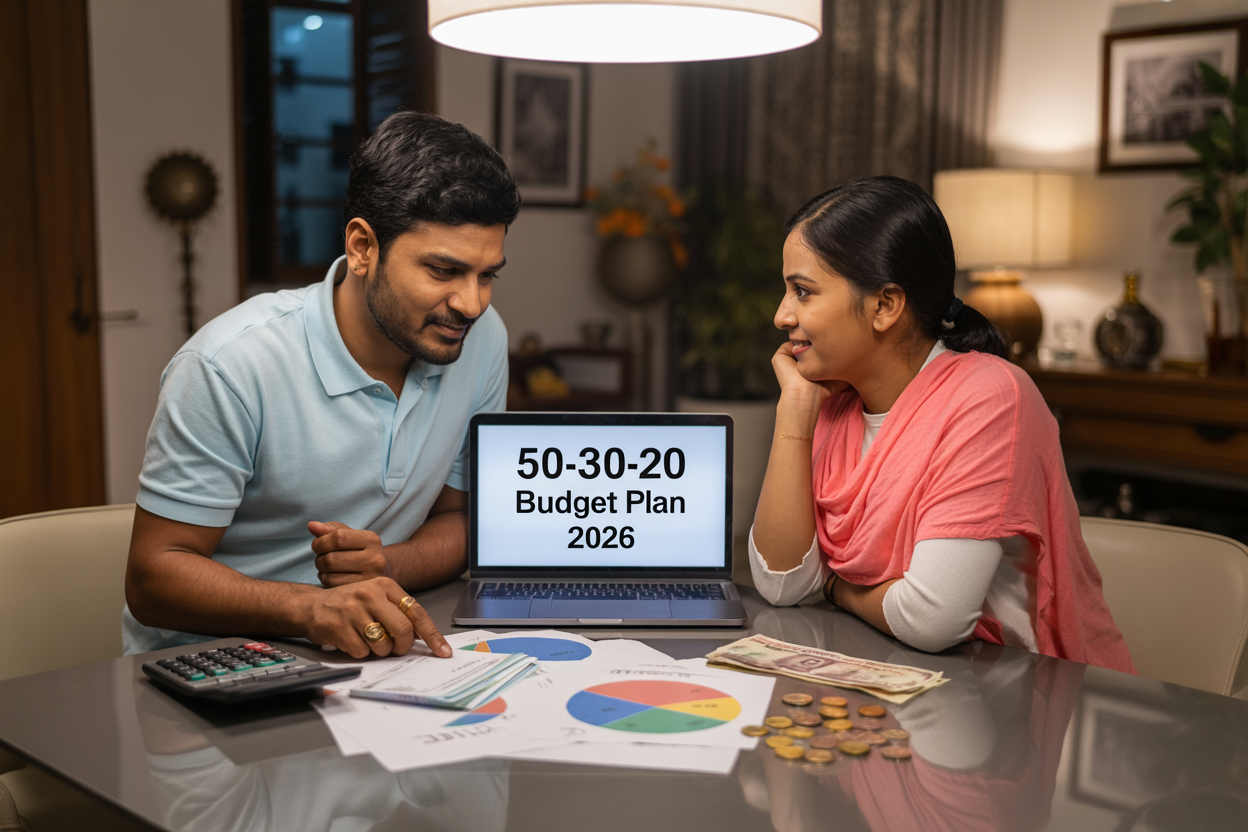
Monthly Budget Planning for in 2026
Managing money feels overwhelming when you’re juggling rent, groceries, kids’ education, and family goals all at once. Monthly budget planning for Indian families doesn’t have to be complicated though – the simple 50 30 20 budget rule India can help you take control of your finances without needing an MBA in accounting.
This guide is designed for working Indian families who want a straightforward approach to household expense management India that actually works with real salaries and expenses. You’ll learn how to split your income into three clear buckets: 50% for must-pay bills, 30% for fun stuff, and 20% for your future.
We’ll walk you through calculating your actual take-home pay (including those tricky variable components), show you exactly what counts as “essential” expenses in the Indian context, and help you adapt this proven system for the economic realities of 2026. You’ll also discover practical family budgeting tips India 2026 for tracking your progress and making adjustments that stick.
Understanding the 50-30-20 Budget Rule for Households

Breaking Down the Percentage Allocation Formula
The 50-30-20 budget rule simplifies monthly budget planning for Indian families by dividing your after-tax income into three clear buckets. Here’s how it works: 50% goes toward essential needs like rent, groceries, and utilities; 30% covers lifestyle choices such as dining out, entertainment, and shopping; and the remaining 20% builds your financial future through savings and investments.
Think of this formula as your financial GPS. When you earn ₹60,000 per month after taxes, you’d allocate ₹30,000 for necessities, ₹18,000 for wants, and ₹12,000 for savings. The beauty lies in its simplicity – no complex calculations or overwhelming spreadsheets required.
The percentages aren’t set in stone. Young professionals might adjust to 60-25-15 while paying off education loans, while families with established careers could shift to 45-25-30 to accelerate wealth building. The key is maintaining balance while staying realistic about your lifestyle and goals.
| Income Level | 50% (Needs) | 30% (Wants) | 20% (Savings) |
|---|---|---|---|
| ₹40,000 | ₹20,000 | ₹12,000 | ₹8,000 |
| ₹60,000 | ₹30,000 | ₹18,000 | ₹12,000 |
| ₹80,000 | ₹40,000 | ₹24,000 | ₹16,000 |
Why This Approach Works for Middle-Class Families
Middle-class Indian families face unique financial pressures that make traditional budgeting methods feel restrictive or unrealistic. The 50 30 20 budget rule India adapts perfectly to these challenges because it acknowledges that families need flexibility alongside financial discipline.
Indian households typically juggle multiple financial responsibilities simultaneously – children’s education, aging parents’ healthcare, property EMIs, and festival expenses. The 50-30-20 framework provides breathing room for these cultural and familial obligations without derailing long-term financial health.
This approach also addresses the Indian middle-class tendency to either save too aggressively (missing out on present enjoyment) or spend impulsively (compromising future security). By allocating 30% specifically for discretionary spending, families can enjoy dining out, weekend trips, or shopping without guilt, knowing their essential needs and savings are already covered.
The rule scales beautifully with income growth. As salaries increase, each category expands proportionally, preventing lifestyle inflation from completely consuming raises. A family earning ₹50,000 monthly has ₹15,000 for lifestyle spending, while one earning ₹1 lakh gets ₹30,000 – maintaining financial balance across income levels.
Common Budgeting Mistakes to Avoid in 2026
The biggest mistake Indian families make is treating the emergency fund as optional. With economic uncertainties and inflation pressures expected in 2026, skipping emergency savings leaves families vulnerable to unexpected job losses, medical emergencies, or market downturns. Build this fund within your 20% allocation before pursuing other investments.
Another critical error involves misclassifying expenses. Many families squeeze restaurant meals, expensive phone plans, or premium streaming subscriptions into the “needs” category when they clearly belong in “wants.” Be honest about what truly constitutes an essential expense versus a lifestyle choice.
Ignoring digital transaction tracking represents a modern budgeting blindspot. UPI payments, online shopping, and subscription services create spending patterns that aren’t immediately visible like cash transactions. Review your bank statements monthly to catch these digital leaks.
Family budgeting tips India 2026 also include avoiding the perfectionism trap. Missing your budget targets one month doesn’t mean the system failed – it means you’re human. Adjust and continue rather than abandoning the framework entirely. The goal is progress, not perfection.
Finally, don’t neglect regular budget reviews. What worked in January might need adjustment by June as circumstances change. Schedule monthly budget check-ins to ensure your allocations still align with your current priorities and income reality.
Calculating Your Monthly Take-Home Income Accurately

Including salary, bonuses, and side income sources
Your take-home income forms the foundation of effective monthly budget planning for Indian families. Start by listing your primary salary after all deductions. Don’t just rely on your basic pay – factor in fixed allowances like HRA, transport allowance, and medical benefits that you receive consistently each month.
Bonuses deserve special attention in Indian corporate culture. Performance bonuses, festival bonuses, and annual incentives can significantly boost your yearly earnings. Calculate the average monthly equivalent by dividing your total annual bonus by 12. This approach helps you avoid the feast-or-famine cycle that many families experience when bonuses arrive unexpectedly.
Side income streams are becoming increasingly common in India’s gig economy. Whether you’re freelancing, running a small business, tutoring, or earning from investments, include these amounts in your income calculation. Be conservative with estimates – it’s better to underestimate variable income than to overstretch your budget.
Create a simple income tracking sheet with three columns: guaranteed monthly income, variable monthly income (averaged), and one-time income sources. This gives you a clear picture of what you can count on versus what might fluctuate.
Accounting for tax deductions and provident fund contributions
Understanding your deductions is crucial for accurate household expense management India. Your salary slip contains multiple deductions that impact your actual take-home amount. Start with the obvious ones: income tax, provident fund (EPF), and professional tax.
Employee Provident Fund typically deducts 12% of your basic salary, with your employer contributing an equal amount. While this reduces your immediate take-home pay, remember that this money is building your retirement corpus. Some employees also contribute to the Voluntary Provident Fund (VPF) for additional tax benefits and savings.
Health insurance premiums, life insurance payments, and other voluntary deductions also reduce your take-home amount. Track these carefully because they often change annually. Many companies offer flexible benefit plans where you can choose your deduction amounts for various benefits.
Tax deductions under Section 80C, 80D, and other provisions don’t directly impact your monthly salary but affect your annual tax liability. If you’re eligible for tax refunds, factor these into your yearly financial planning rather than monthly budgeting.
Managing irregular income streams effectively
Irregular income presents unique challenges for family budgeting tips India 2026. Many Indians work in sectors with variable pay structures – sales professionals, business owners, consultants, and seasonal workers all face income fluctuations.
Create a base budget using your lowest expected monthly income over the past year. This becomes your survival budget that covers essential expenses. When higher income months arrive, resist the temptation to upgrade your lifestyle immediately. Instead, build a buffer fund that can support you during lean periods.
The envelope method works particularly well for irregular income. When money comes in, immediately allocate amounts to different expense categories. Keep separate accounts or physical envelopes for fixed expenses, discretionary spending, and savings. This prevents you from accidentally spending next month’s grocery money on today’s entertainment.
Track your income patterns over 12-24 months to identify trends. Many businesses have seasonal peaks and valleys. Understanding these cycles helps you prepare financially and avoid panic during predictable low-income periods.
Planning for annual increments and inflation adjustments
Annual salary increments are a standard expectation in Indian employment, typically ranging from 8-15% depending on performance and market conditions. Don’t wait until you receive your increment to plan for it. Most companies announce increments in April or January, giving you time to prepare.
When your increment arrives, avoid lifestyle inflation by automatically increasing your savings rate. If you receive a 10% increment, consider directing 7% toward increased savings and only 3% toward lifestyle improvements. This approach helps you build wealth while still enjoying some benefits of your career growth.
Inflation in India typically runs 4-6% annually, meaning your purchasing power decreases if your income doesn’t keep pace. Plan for this by ensuring your increments exceed inflation rates. If your increment is below inflation, you might need to adjust your budget allocations or find additional income sources.
Consider creating an increment allocation plan before you receive it. Decide what percentage goes to increased EMI payments, higher SIP investments, upgraded lifestyle expenses, and emergency fund building. Having a plan prevents impulsive decisions when the extra money hits your account.
Review and adjust your budget every quarter rather than annually. This allows you to respond quickly to income changes, inflation impacts, and evolving family needs. Regular reviews also help you spot spending patterns and make timely corrections to stay on track with your financial goals.
Allocating 50% for Essential Needs and Fixed Expenses

Prioritizing Housing Costs Including Rent and EMIs
Housing typically eats up the largest chunk of your essential expenses, often claiming 25-35% of your total income in Indian urban areas. Whether you’re paying rent or managing home loan EMIs, keeping this expense within the 50% allocation requires smart planning.
For renters, stick to the thumb rule of spending no more than 30% of your monthly take-home income on rent. In cities like Mumbai or Bangalore, this might feel tight, but compromising on location or apartment size helps maintain your monthly budget planning for Indian families. Consider areas with good connectivity but slightly away from city centers where rents are more reasonable.
EMI payments need careful calculation before taking any home loan. Banks typically approve loans where EMI doesn’t exceed 40% of your income, but aim for 20-25% to leave room for other essential expenses. Factor in maintenance charges, property taxes, and potential repairs when budgeting for owned homes.
Budgeting for Groceries and Household Necessities
Food expenses account for 15-25% of Indian household budgets, varying significantly between urban and rural areas. Create a monthly grocery list based on your family size and eating habits. Track prices at different stores and wholesale markets to find the best deals.
Smart grocery shopping involves buying staples like rice, dal, and oil in bulk during festive sales. Plan weekly menus to avoid food waste and impulse purchases. Local vegetable markets often offer better prices than supermarkets, especially for seasonal produce.
Household expense management India becomes easier when you separate needs from wants. Essential cleaning supplies, toiletries, and basic kitchen items should get priority over branded or luxury versions.
Managing Utility Bills and Transportation Expenses
Electricity, gas, water, internet, and phone bills form a predictable monthly expense pattern. Review your usage patterns and look for energy-saving opportunities. LED bulbs, efficient appliances, and mindful usage can reduce electricity costs by 15-20%.
Transportation costs vary widely based on your city and commute distance. Public transport remains the most budget-friendly option in metro cities. If you own a vehicle, budget for fuel, maintenance, insurance, and parking separately. Many Indian families find that using a mix of public transport and ride-sharing services costs less than owning a car.
Create a transportation budget that includes daily commute, occasional travel, and emergency trips. Factor in annual vehicle servicing and registration renewals to avoid surprise expenses.
Planning for Insurance Premiums and Medical Costs
Health insurance has become non-negotiable for Indian families, especially after recent healthcare cost inflation. Budget for family floater policies that provide adequate coverage for medical emergencies. Term life insurance premiums should also find a place in your essential expenses.
Set aside 3-5% of your income for medical costs not covered by insurance, including routine check-ups, medicines, and dental care. Many employers provide basic health coverage, but additional top-up insurance often proves worthwhile.
Setting Aside Emergency Fund Contributions
Building an emergency fund deserves priority in your essential expenses category. Aim to save at least 10% of your 50% allocation toward creating a fund that covers 6-12 months of expenses. This fund protects your family during job loss, medical emergencies, or unexpected major expenses.
Start with small monthly contributions and gradually increase them. Keep emergency funds in easily accessible savings accounts or liquid funds rather than fixed deposits that lock your money away.
Managing 30% for Lifestyle and Discretionary Spending
Planning entertainment and dining out expenses
Entertainment and dining expenses can quickly spiral out of control if you don’t keep tabs on them. The 30% discretionary portion of your monthly budget planning for Indian families should cover these fun activities without deriving you of future financial security.
Start by tracking your current entertainment spending for a month. Include movie tickets, streaming subscriptions, weekend outings, restaurant meals, and food delivery orders. Many Indian families spend 15-20% of their income on dining and entertainment alone, which leaves little room for other lifestyle needs.
Create specific sub-categories within your entertainment budget:
- Dining out and food delivery: ₹3,000-₹5,000 monthly
- Movie tickets and entertainment venues: ₹1,500-₹2,500 monthly
- Streaming services and digital subscriptions: ₹500-₹1,000 monthly
- Weekend activities and outings: ₹2,000-₹4,000 monthly
Set weekly limits for food delivery apps like Swiggy and Zomato. These platforms make ordering incredibly easy, but small orders add up fast. Consider designating specific days for ordering out rather than impulsive daily orders.
Look for entertainment deals and discounts. Many theaters offer special pricing on weekdays, and group bookings often come with discounts. Apps like BookMyShow frequently have cashback offers that can stretch your entertainment budget further.
Plan your dining experiences strategically. Instead of frequent expensive restaurant visits, mix high-end dining with budget-friendly local eateries and home cooking experiments. This approach lets you enjoy variety without breaking your discretionary spending limit.
Budgeting for clothing and personal care items
Clothing and personal care represent essential lifestyle expenses that require smart planning. Indian families often underestimate these costs, especially when festivals and wedding seasons arrive.
Break down clothing expenses by family member and season:
| Category | Monthly Allocation | Annual Budget |
|---|---|---|
| Adult clothing | ₹2,000-₹3,500 | ₹24,000-₹42,000 |
| Children’s clothing | ₹1,500-₹2,500 | ₹18,000-₹30,000 |
| Footwear | ₹1,000-₹1,500 | ₹12,000-₹18,000 |
| Personal care | ₹1,500-₹2,000 | ₹18,000-₹24,000 |
Personal care includes haircuts, skincare products, cosmetics, and grooming supplies. These recurring expenses often get overlooked in family budgeting tips India 2026 discussions, but they’re necessary for maintaining professional and social standards.
Shop during sale seasons for maximum value. Major sales happen during Diwali, end-of-season clearances, and online shopping festivals like Amazon Great Indian Festival. Stock up on basics like undergarments, socks, and everyday clothing during these periods.
Consider quality over quantity when buying clothes. One well-made shirt that lasts two years costs less per wear than three cheap shirts that need replacing every few months. This approach works particularly well for work clothes and formal wear.
Build a capsule wardrobe focused on versatile pieces that mix and match easily. This strategy reduces the urge to buy impulsive clothing items while ensuring you always have appropriate outfits.
Allocating funds for hobbies and recreational activities
Hobbies and recreational activities contribute significantly to mental health and family bonding, making them worthy investments within your discretionary spending framework. The key lies in choosing activities that provide long-term value rather than short-term thrills.
Popular hobby categories for Indian families include:
- Fitness and sports: Gym memberships, sports equipment, yoga classes
- Creative pursuits: Art supplies, musical instruments, craft materials
- Learning activities: Online courses, books, workshop fees
- Travel and exploration: Weekend trips, local sightseeing, travel gear
Set a monthly hobby budget of ₹2,000-₹4,000 per person, adjusting based on your total discretionary allowance. This amount covers equipment, supplies, and participation fees for most recreational activities.
Choose hobbies with low ongoing costs but high engagement value. Photography using a smartphone, hiking, reading, cooking new cuisines, and learning languages through apps like Duolingo offer excellent returns on investment. These activities provide entertainment for months or years after the initial setup cost.
Share hobby expenses within the family when possible. A family gym membership costs less per person than individual memberships. Musical instruments can be shared among family members who want to learn. Board games and craft supplies serve multiple family members simultaneously.
Consider seasonal hobby rotations to keep things interesting while managing costs. Summer might focus on outdoor activities, while monsoon season could emphasize indoor creative pursuits. This approach prevents hobby-related expenses from becoming too predictable or boring.
Track which recreational activities provide the most satisfaction relative to their cost. Some expensive hobbies might deliver tremendous joy and stress relief, justifying their place in your budget. Others might lose their appeal quickly, signaling a need to redirect funds toward more engaging activities.
Investing 20% for Future Goals and Wealth Building
Choosing between mutual funds, SIPs, and fixed deposits
Smart investment choices form the backbone of your monthly budget planning for Indian families. When you’re setting aside 20% of your income, you need to pick the right mix of investment vehicles that match your risk appetite and time horizon.
Systematic Investment Plans (SIPs) offer the perfect starting point for most Indian families. With SIPs, you can start investing as little as ₹500 per month in mutual funds, making them accessible even for modest budgets. The beauty of SIPs lies in rupee cost averaging – you buy more units when prices are low and fewer when prices are high, smoothing out market volatility over time.
Equity mutual funds through SIPs historically deliver inflation-beating returns over 7-10 year periods. Large-cap funds provide stability, while mid-cap and small-cap funds offer higher growth potential with increased risk. For beginners, balanced hybrid funds that mix equity and debt provide a good middle ground.
Debt mutual funds serve as excellent alternatives to traditional fixed deposits. They offer better tax efficiency and potentially higher returns than bank FDs. Ultra-short duration funds work well for parking emergency funds, while longer-duration funds suit your medium-term goals.
Fixed deposits still have their place in Indian households, especially for risk-averse investors nearing retirement or those building an emergency corpus. Bank FDs offer guaranteed returns and complete capital protection, though inflation often erodes their real value over time.
The smart approach involves diversifying across all three options based on your goals and timeline. Allocate 60-70% to equity SIPs for long-term wealth creation, 20-30% to debt funds for stability, and keep 10-15% in FDs for immediate liquidity needs.
Planning for children’s education and marriage expenses
Education and marriage costs continue rising faster than general inflation, making early planning essential for every Indian family. Starting a dedicated investment plan when your child is young gives you the power of compounding to work in your favor.
Education planning requires a systematic approach. Engineering and medical courses can cost ₹20-50 lakhs today, and these figures will likely double by 2035-2040. Start with child-specific mutual fund schemes or balanced funds that gradually shift from equity to debt as your child approaches college age.
Create separate SIP investments for each child’s education. For a 5-year-old child, you have 13 years until college – perfect for equity-heavy portfolios. As the child turns 15, start moving funds to safer debt instruments to protect accumulated wealth from market volatility.
Marriage planning needs a different strategy since the timeline is less predictable. Sukanya Samriddhi Yojana works exceptionally well for girl children, offering tax benefits and attractive returns. The account matures when your daughter turns 21, providing substantial funds for her wedding or higher education.
Consider investing in gold ETFs or digital gold as part of marriage planning. Indian families traditionally buy gold for weddings, and systematic gold investments help you accumulate this precious metal without the burden of large one-time purchases.
Set realistic targets based on your income level. Don’t stretch your budget so thin that current living standards suffer. A good rule: aim to accumulate 3-4 times your annual income for each child’s higher education and similar amounts for marriage expenses.
Building retirement corpus through EPF and NPS
Your Employee Provident Fund (EPF) forms the foundation of retirement planning for most salaried Indians. The current EPF contribution stands at 12% of your basic salary, with matching employer contribution, effectively saving 24% of your basic pay for retirement.
EPF offers tax-free returns and complete capital protection, making it incredibly valuable. The current interest rate hovers around 8.5% annually, beating most debt instruments. Maximize your EPF benefits by contributing additional voluntary amounts beyond the mandatory 12% if your employer allows it.
National Pension System (NPS) adds another layer to your retirement planning. NPS investments get additional tax deduction of ₹50,000 under Section 80CCD(1B), over and above the standard ₹1.5 lakh limit under Section 80C. This makes NPS incredibly tax-efficient for building long-term wealth.
NPS offers multiple fund options – from conservative debt funds to aggressive equity funds. Younger investors should opt for higher equity allocation (75% equity in Aggressive Life Cycle Fund) to maximize growth potential. The system automatically reduces equity exposure as you age, protecting your corpus near retirement.
The combination of EPF and NPS can easily replace 40-50% of your pre-retirement income if you start early. Add personal investments like PPF and ELSS mutual funds to reach the ideal replacement ratio of 70-80% of your working years’ income.
Consider opening additional PPF accounts for your spouse to double your Section 80C benefits and build parallel retirement savings. PPF’s 15-year lock-in period aligns perfectly with long-term retirement planning goals.
Exploring tax-saving investment options under Section 80C
Section 80C offers multiple avenues to reduce your taxable income while building wealth, making it essential for family budgeting tips India 2026. The ₹1.5 lakh annual limit provides substantial tax savings, especially for families in higher tax brackets.
Equity Linked Savings Schemes (ELSS) stand out as the most flexible 80C option with just a 3-year lock-in period. ELSS funds invest primarily in equities, offering potential for higher returns compared to traditional tax-saving instruments. They’ve historically delivered 12-15% annual returns over long periods.
Public Provident Fund (PPF) remains the most popular choice among conservative investors. The 15-year lock-in provides tax-free returns currently around 7.1% annually. PPF investments, returns, and withdrawals all enjoy tax exemption, making it a powerful wealth-building tool.
Tax-saving fixed deposits offered by banks provide guaranteed returns with 5-year lock-ins. While returns are taxable, they suit investors wanting certainty over market-linked instruments. Current rates range from 5.5-6.5% annually.
Life insurance premiums for term and whole life policies qualify for 80C deductions. However, treat insurance as protection first and tax saving second. Buy adequate term life cover for your family’s financial security rather than viewing it purely as an investment.
NSC (National Savings Certificate) and SCSS (Senior Citizens Savings Scheme) cater to specific needs. NSC offers 5-year fixed returns with compounding benefits, while SCSS provides regular income for retirees.
Smart families diversify across multiple 80C instruments rather than putting everything in one basket. A typical allocation might include ₹50,000 in PPF, ₹50,000 in ELSS, ₹30,000 in life insurance premiums, and ₹20,000 in NSC or tax-saving FDs. This approach balances growth potential with stability while maximizing tax benefits across your investment portfolio.
Adapting Your Budget for Indian Economic Trends in 2026
Adjusting for Predicted Inflation Rates on Essential Goods
Inflation in India is expected to remain a significant concern throughout 2026, particularly affecting essential goods like food, fuel, and utilities. For effective monthly budget planning for Indian families, you need to build flexibility into your 50% essential expenses allocation.
Food inflation typically runs 2-3% higher than general inflation in India. If your current monthly grocery budget is ₹15,000, plan for an increase to ₹16,000-16,500 by year-end. Create a buffer by allocating an extra 5-7% within your essentials category specifically for price increases.
Track monthly price changes for your most-purchased items – rice, dal, vegetables, cooking oil, and milk. Many families find success by buying non-perishables in bulk when prices dip, especially during harvest seasons. Stock up on essentials like rice, wheat flour, and cooking oil during festival discount periods.
Fuel costs directly impact transportation budgets and indirectly affect all goods through logistics costs. If petrol prices rise by ₹5 per liter, your monthly commute cost could increase by ₹800-1,200. Consider carpooling arrangements or public transport alternatives to offset these increases.
Electricity and cooking gas prices often see government-regulated increases. Review your utility consumption patterns and invest in energy-efficient appliances. LED bulbs, inverter ACs, and induction cooktops can reduce monthly bills by 15-25%.
Leveraging Digital Payment Benefits and Cashback Offers
Digital payments have become integral to household expense management India strategies, offering substantial savings opportunities when used strategically.
Credit cards with category-specific rewards can reduce effective spending by 2-5%. Use cards offering higher cashback on groceries for supermarket purchases, fuel cards for petrol expenses, and utility-focused cards for bill payments. Many banks offer 5% cashback on online purchases and 2% on offline retail.
UPI platforms frequently run cashback campaigns. PhonePe, Google Pay, and Paytm offer regular promotions ranging from ₹10-100 per transaction. While individual amounts seem small, consistent usage can save ₹500-800 monthly.
Digital wallet offers often provide better deals than direct payments. Amazon Pay, Paytm Wallet, and other platforms offer exclusive discounts on food delivery, cab rides, and online shopping. Load these wallets during bonus offers to maximize benefits.
Subscription-based cashback programs like Amazon Prime provide free delivery, exclusive deals, and cashback on purchases. For families spending ₹8,000+ monthly on online purchases, the annual fee pays for itself through savings.
Banking apps now offer automated savings through round-up features and goal-based investments. Every transaction gets rounded up to the nearest ₹10, with the difference automatically invested. This painless approach can accumulate ₹2,000-3,000 annually.
Incorporating Government Schemes and Subsidies
Government subsidies and schemes can significantly impact your budget allocation when properly utilized as part of family budgeting tips India 2026.
LPG subsidies under Pradhan Mantri Ujjwala Yojana continue providing relief to eligible households. If you qualify, the subsidy amount should be factored into your cooking fuel budget calculations. Direct Benefit Transfer ensures subsidies reach your bank account promptly.
Healthcare schemes like Ayushman Bharat provide coverage up to ₹5 lakh per family annually. Families covered under this scheme can reduce their emergency fund allocation from 6 months to 3-4 months of expenses, freeing up money for investments.
Education schemes offer scholarships, free textbooks, and meal programs. Factor these benefits into your children’s education budget. Many state governments provide laptops, uniforms, and transportation allowances that can reduce annual education expenses by ₹10,000-25,000.
Housing schemes like Pradhan Mantri Awas Yojana offer interest subsidies and down payment assistance. If you’re planning to buy a home, these subsidies can reduce your EMI burden by ₹200-500 monthly, allowing more flexibility in your budget allocation.
Food security schemes provide subsidized grains through Fair Price Shops. Eligible families can access rice at ₹3/kg and wheat at ₹2/kg, substantially reducing monthly food expenses. Plan your grain purchases around these quotas to maximize savings.
Planning for Festival Seasons and Cultural Expenses
Festival expenses form a significant portion of Indian household budgets, often disrupting the 50 30 20 budget rule India if not planned properly.
Create a separate festival fund by setting aside ₹1,000-3,000 monthly depending on your income level. This proactive approach prevents festival expenses from derailing your regular budget or forcing you into debt.
Major festivals like Diwali, Dussehra, and regional celebrations typically require 2-3 months of average monthly discretionary spending. For a family with ₹15,000 monthly lifestyle expenses, allocate ₹30,000-45,000 annually for festival-related costs including clothes, gifts, decorations, and special food.
Festival shopping strategies can reduce costs significantly. Buy gold during Akshaya Tritiya for better rates, purchase clothes during end-of-season sales, and stock up on dry fruits and sweets from wholesale markets. Many families save 20-30% by planning purchases 2-3 months ahead.
Travel expenses during festivals increase dramatically due to surge pricing. Book train tickets well in advance, consider traveling a day or two before peak dates, and explore bus options for shorter distances. Flight bookings 45-60 days ahead can save ₹3,000-8,000 per ticket.
Gift expenses can be managed through bulk purchasing, homemade options, and group gifting arrangements with extended family. Set spending limits for different relationships – immediate family, relatives, friends, and colleagues – to avoid overspending driven by social pressure.
Cultural events like weddings, house-warming ceremonies, and religious functions require careful budgeting. Maintain a social events fund separate from festival funds, contributing ₹500-1,500 monthly based on your social circle and family traditions.
Tracking and Reviewing Your Budget Performance Monthly
Using Mobile Apps and Digital Tools for Expense Monitoring
Digital tools have revolutionized how Indian families approach monthly budget planning for Indian families. Popular apps like Walnut, Money View, and ET Money sync directly with your bank accounts and credit cards, automatically categorizing your expenses. These platforms understand Indian spending patterns, recognizing everything from UPI transactions at local vendors to monthly SIP investments.
The beauty of these apps lies in their real-time tracking capabilities. When you buy groceries using your debit card or pay for fuel via digital payment, the expense gets recorded instantly. Many apps even send push notifications when you’re approaching your budget limits for specific categories, helping you stick to your 50-30-20 allocation.
For families preferring manual tracking, simple spreadsheet templates work wonders. Create separate columns for your 50% needs (rent, groceries, utilities), 30% wants (dining out, entertainment), and 20% savings. Google Sheets allows multiple family members to update expenses simultaneously, making it perfect for joint household expense management India.
Bank-specific apps from HDFC, SBI, and ICICI now offer built-in expense categorization features. These tools analyze your transaction history and provide monthly spending summaries, making it easier to see where your money actually goes versus where you planned to spend it.
Identifying Spending Patterns and Making Necessary Adjustments
After three months of tracking, clear patterns emerge in your spending behavior. You might discover that your grocery budget consistently exceeds the allocated amount, or that subscription services are quietly draining your discretionary funds. This data becomes the foundation for refining your 50 30 20 budget rule India strategy.
Look for seasonal trends specific to Indian households. Festival months like October and November typically see increased spending on clothing, gifts, and travel. Summer months might show higher electricity bills due to air conditioning usage. Recognizing these patterns allows you to adjust your budget proactively rather than reactively.
Weekly spending reviews work better than monthly ones for most Indian families. Set aside 15 minutes every Sunday to review the previous week’s expenses. Ask yourself: Did we overspend on food delivery? Are we using all our streaming subscriptions? These micro-adjustments prevent major budget derailments.
When you notice overspending in one category, don’t just cut expenses blindly. Instead, identify the root cause. If grocery bills are high, maybe bulk buying from wholesale markets could reduce costs. If entertainment expenses are climbing, consider free alternatives like local parks or community events.
Celebrating Financial Milestones and Maintaining Motivation
Building healthy financial habits requires positive reinforcement. When you successfully stick to your budget for a full month, celebrate with a small treat that fits within your 30% discretionary spending. This could be a family movie night or a special home-cooked meal.
Set micro-goals alongside your major financial objectives. Instead of just aiming to save ₹1 lakh annually, celebrate when you reach ₹25,000, then ₹50,000. These smaller victories maintain momentum and make the larger goal feel achievable.
Create a visual progress tracker for your family’s financial goals. A simple chart showing your emergency fund growth or debt reduction progress can be incredibly motivating. Many families stick these charts on their refrigerator as daily reminders of their financial journey.
Share your successes with trusted friends or family members who understand your financial goals. Having accountability partners makes the process more enjoyable and provides external motivation when your own enthusiasm wanes.
Track non-monetary wins too. Maybe you resisted an impulse purchase or found a great deal on a necessary item. These behavioral victories are just as important as the numerical ones and deserve recognition.
Regular family financial meetings, perhaps monthly, help maintain everyone’s commitment to the budget. Make these sessions positive by starting with wins before addressing areas needing improvement. This approach keeps family budgeting tips India 2026 discussions constructive rather than stressful.
The 50-30-20 budgeting method offers Indian families a straightforward path to financial stability and growth in 2026. By dedicating half your income to essentials, 30% to lifestyle choices, and 20% to savings and investments, you create a balanced approach that covers today’s needs while building tomorrow’s security. This rule adapts well to India’s diverse income levels and economic conditions, making it practical whether you’re dealing with inflation, changing job markets, or evolving family needs.
Conclusion
Start implementing this budget framework today by calculating your exact take-home income and dividing it into these three buckets. Track your spending monthly to see where adjustments are needed, and don’t be afraid to tweak the percentages slightly based on your family’s unique situation. The key is consistency – even small steps toward better money management will compound into significant financial progress over time. Your future self will thank you for taking control of your finances now.